AWM Locals -- Email Subscribers -- Regional Regulars -- Log in here first-->
Open mobile app
Awm Phone ContactMon–Sat: 11:00 AM — 5:00 PM
Need more info on a wine, want to talk food pairings? We’re just a call away, and we'd love to help!
The Willamette Valley AVA is the opposite of Napa’s showpiece style. No grand gates and mansions on the hill, just vineyard‑lined hills disappearing into fog and never-ending blue Oregon skies. Between the Coast Range and the Cascades, and at the same latitude as Burgundy, the Willamette Valley gets a steady push of cool Pacific air throughout the season. It’s a true cool‑climate growing region.
Pinot Noir dominates red production here, and the long, cool growing season forces slow ripening, building aromatic complexity while preserving the bright lift that gives Willamette Pinot Noir its signature structure. Three primary soil types define the northern valley: Jory volcanic clay, Willakenzie sedimentary loam, and wind-deposited Laurelwood loess. Elk Cove farms all three across six estate sites, and this diversity of terroir definitely shows up in your glass.
Pat and Joe Campbell founded Elk Cove in 1974, planting a vineyard outside Gaston with no regional roadmap and no experience in viticulture or winemaking. The name came that first winter when a herd of 40 Roosevelt elk bedded down near the family's trailer and stayed. Their son Adam joined in 1995 and is now winemaker and second-generation owner.
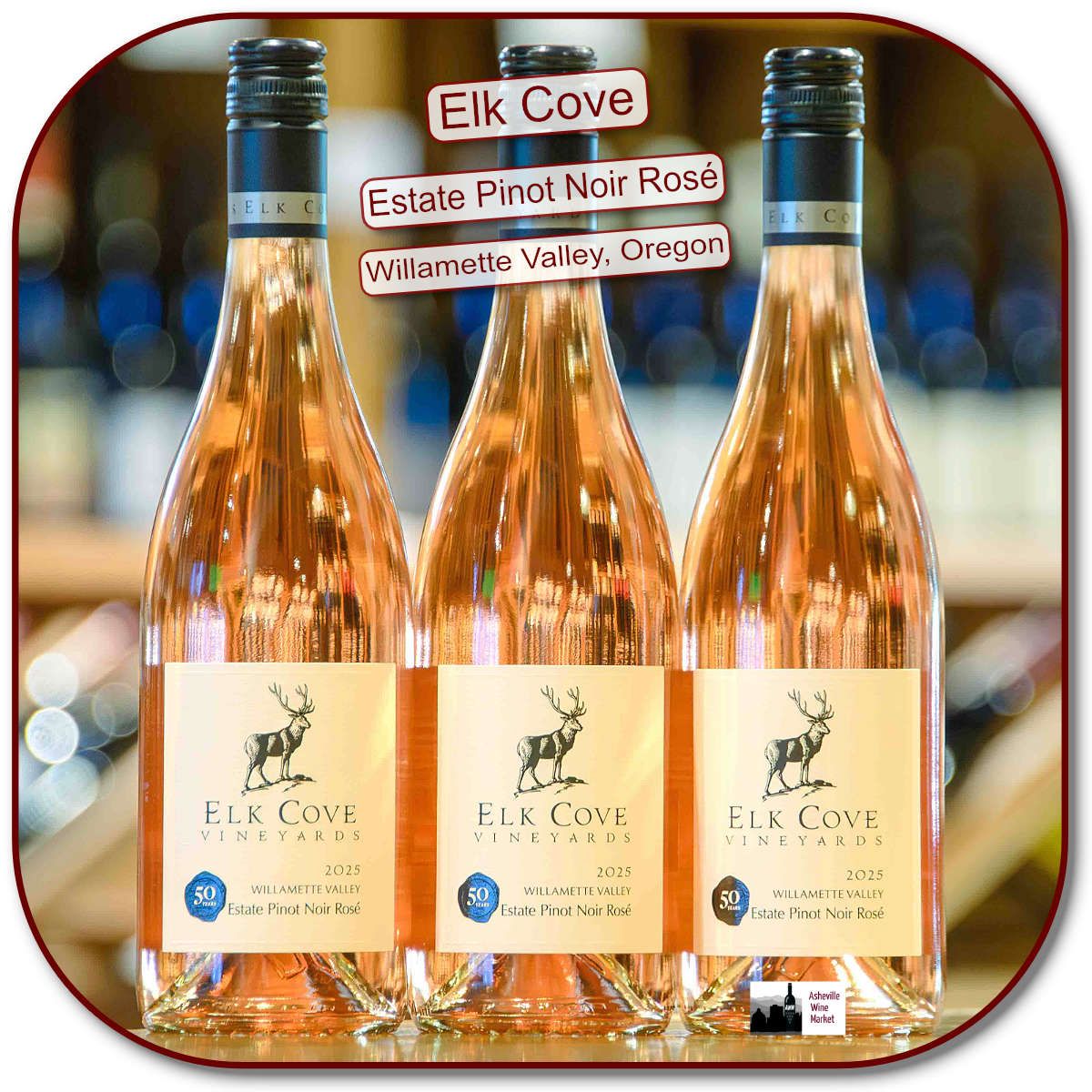
Elk Cove Pinot Noir rosé leans fruit‑forward and properly dry, anchored by balanced lift and acidity. Style-wise, I’d park it dead center between pale Provençal pinks and the denser red fruit of West Coast styles. Elk Cove’s expression is hand‑harvested from mature estate vineyards, some nearly 50 years old, then whole‑bunch pressed with only brief skin contact to keep the wine crisp and focused. A measured addition of fully fermented red Pinot Noir brings the extra color and mid‑palate texture. It finishes fully dry at 12–13%.
In your glass, the dusty salmon color leads to aromas of fresh strawberry, rose petal, and citrus peel, with hints of dried mango, watermelon, and white flowers. Strawberry, tart cherry, and pink grapefruit lead through the middle palate, finishing with orange zest, and a whisper of baking spice.
Classic Pacific Northwest pairings include steamed crab, grilled wild salmon, simply sautéed shrimp, and charcuterie boards. This would be a perfect pink for Korean bibimbap, Nashville hot chicken, or a bánh mì with pickled daikon and grilled pork.
AWM Locals -- Email Subscribers -- Regional Regulars -- Log in here first-->
Need more info on a wine, want to talk food pairings? We’re just a call away, and we'd love to help!