AWM Locals -- Email Subscribers -- Regional Regulars -- Log in here first-->
Open mobile app
Awm Phone ContactMon–Sat: 11:00 AM — 5:00 PM
Need more info on a wine, want to talk food pairings? We’re just a call away, and we'd love to help!
The Languedoc sits along the sun-drenched arc of France's southern Mediterranean coastline, stretching from the foothills above Nîmes all the way past Narbonne toward the Pyrenées. It is, by most accounts, the birthplace of French wine itself. The Greeks planted vines here as early as the 5th century BC, the Romans expanded them, and the region has been under vine ever since. Today it’s the largest wine-producing region in France, covering roughly 545,000 acres and accounting for a staggering share of the country's vinous output.
The relentlessly Mediterranean climate of the Languedoc features warm, dry summers, mild winters, and the Tramontane coastal winds that keep the vineyards ventilated and the grapes healthy. Soils range from clay-limestone to ancient volcanic slopes, and that diversity of terroir is exactly what makes the region so interesting.
Carignan has a long and complicated history in this region. The red version, Carignan Noir, was once widely planted across southern France because it was an abundant overachiever that could withstand the hot, dry climate. Old-vine Carignan, in the hands of a talented vigneron, produces wines with serious structure, savory depth, and a strong Mediterranean identity. It is one of those grapes that tells you a lot about who is farming it and how seriously they take the vineyard.
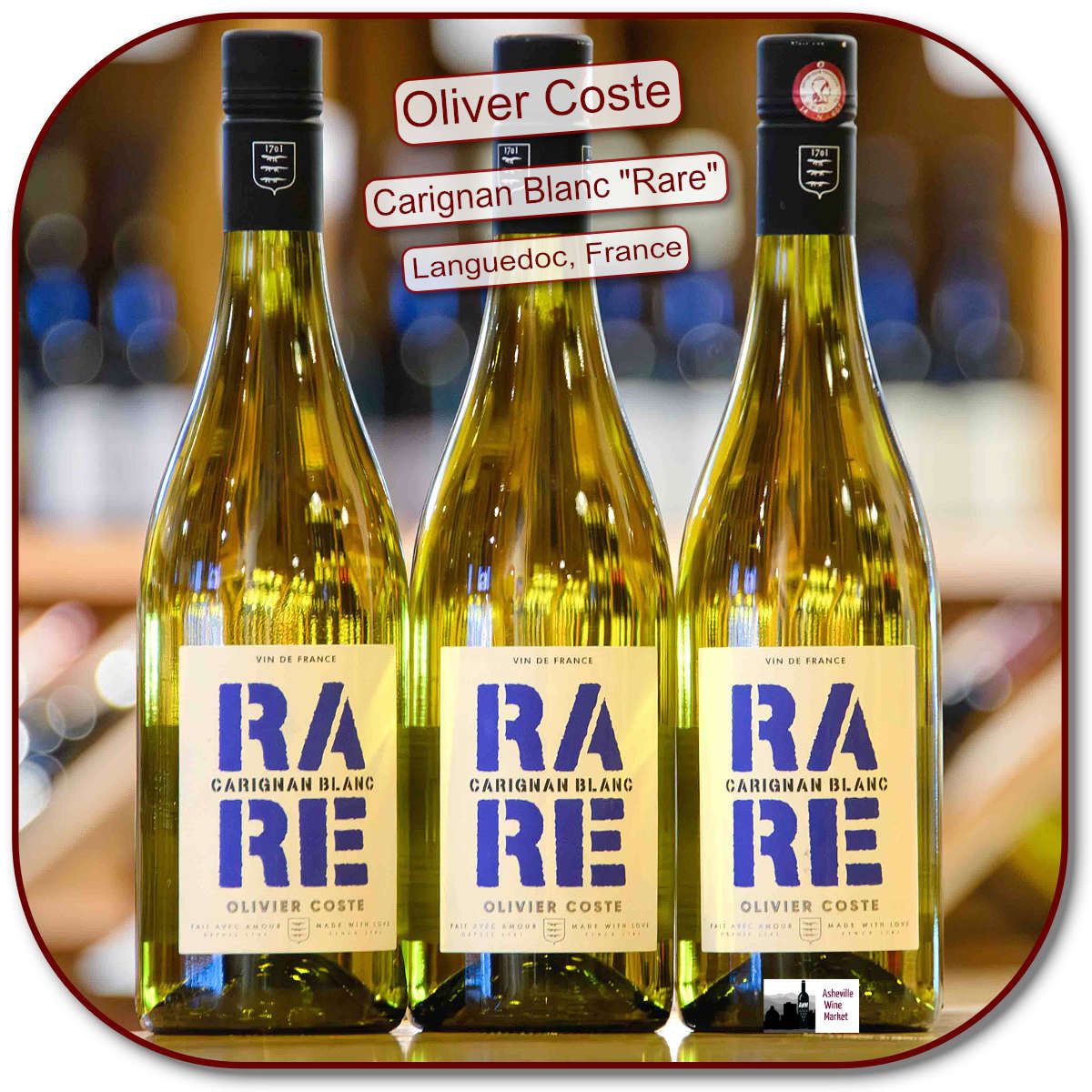
Carignan Blanc is the rare branch of that vinous family. It is a white-skinned mutation of Carignan, and today there are only about 250 hectares left, mostly in the Languedoc. That makes Olivier Coste’s “Rare” more than just an unusual bottle with an eBay-esque moniker. It is part of a noble effort to keep a nearly vanished Mediterranean varietal in wine lovers’ glasses.
Domaine Montrose has deep roots near Pézenas in the Languedoc, with evidence of winemaking on the property dating back to the 16th century. The family story is traced to 1701, when Joseph Alazard, an ancestor of the Coste family, received the “Three Lizards” coat of arms, a symbol that still appears on Montrose bottles today. Today, Bernard and Olivier Coste continue that family line, balancing the domaine's long history with a more modern focus on sustainable farming, fresh southern French wines, and the preservation of regional grapes that deserve more attention.
I love that Olivier treats his Carignan Blanc as something more than an odd-ball rarity. The “Rare” cuvée comes from a two‑hectare parcel of 70‑year‑old vines on limestone in Castelnau‑de‑Guers, just inland from the Mediterranean. To preserve its freshness, he harvests the fruit at night, destems, cold-soaks for 24 hours, then presses and ferments it at very low temperatures. Another bonus: the wine lands at 12.5% alcohol.
In your glass, aromas of pear, white peach, and tangerine lead to a beautifully rounded palate with notes reminiscent of Vermentino or Sémillon. The rich palate has a nice beam of bright citrus acidity and a thread of minerality keeping the finish clean and fresh.
For classic regional pairings, think Mediterranean-style seafood from the coast, grilled shrimp, mussels with garlic and herbs, brandade de morue, goat cheese tarts, pissaladière, or a simple salad with fennel, citrus, and olives. It would also be excellent with chicken cooked with lemon and herbs, or a plate of prosciutto and melon. If you’re feeling a little more adventurous, try it with Vietnamese summer rolls, Thai green papaya salad, sushi with citrus or ponzu, fried chicken with a squeeze of lemon, or tacos with grilled fish and a zesty cabbage slaw. The wine has enough freshness for seafood and salads, but enough texture to work beyond the usual white-wine lane.
AWM Locals -- Email Subscribers -- Regional Regulars -- Log in here first-->
Need more info on a wine, want to talk food pairings? We’re just a call away, and we'd love to help!